
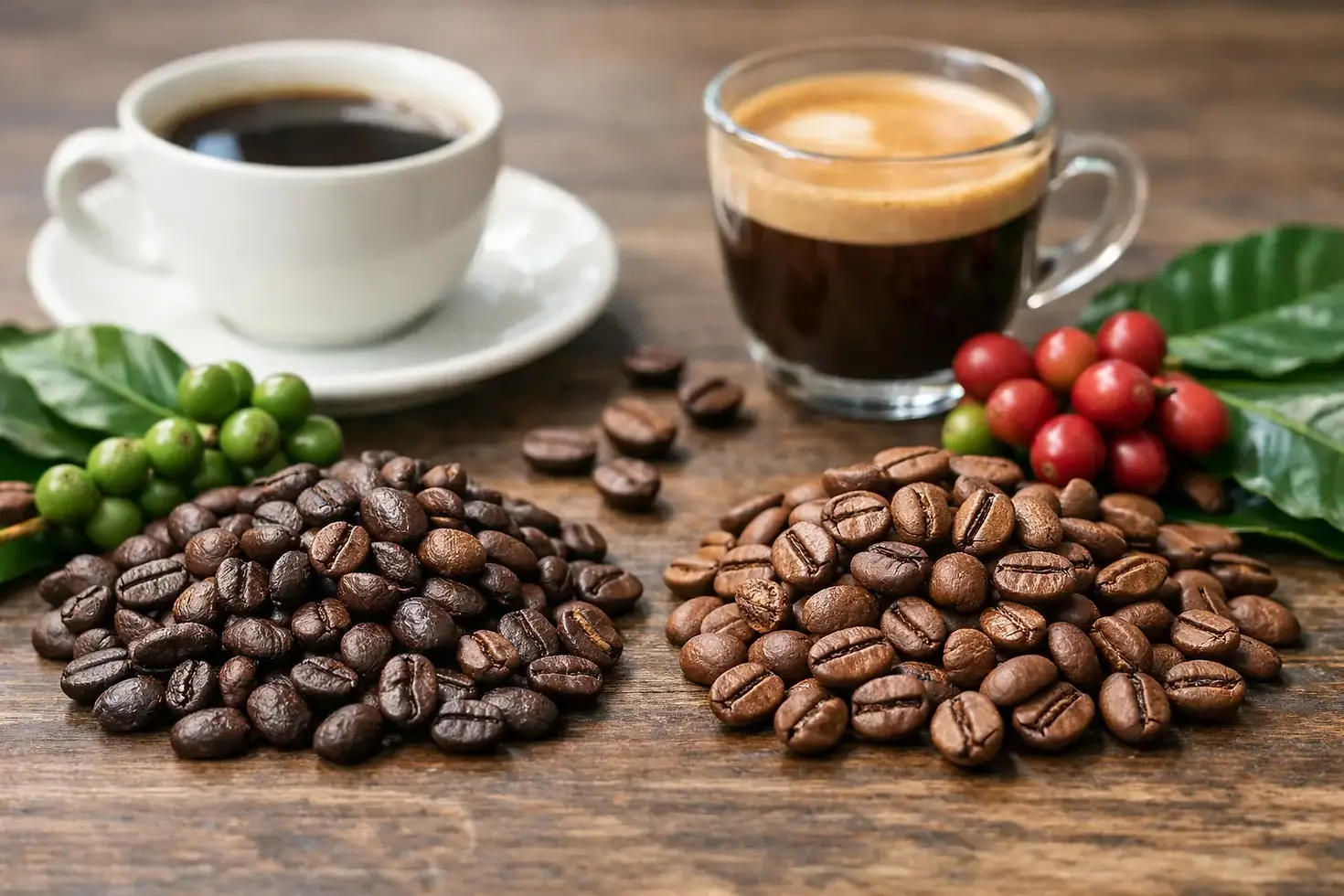
Robusta vs Arabica Coffee: What Tastes Better?
The first sip usually decides the argument faster than any coffee chart ever will. If you have tasted a deep, chocolatey Vietnamese phin coffee that lingers with a pleasantly bold finish, then tried a floral pour-over with bright fruit and tea-like clarity, you have already met the core of robusta vs arabica coffee. This is not a simple good-bean, bad-bean conversation. It is a question of origin, intention, and what kind of cup you actually want.
In specialty coffee circles, arabica often gets treated like the default standard. It is praised for complexity, elegance, and nuance. Robusta, meanwhile, is often misunderstood as the harsher cousin. That view misses a lot. When sourced with care and brewed with purpose, robusta can be deeply satisfying - bold, smooth, richly nutty, and especially compelling in drinks that benefit from weight, crema, and structure.
Robusta vs Arabica Coffee at a Glance
Arabica and robusta are two different coffee species, and that difference shows up in nearly every part of the experience. Arabica tends to grow at higher elevations and is generally associated with sweeter, more aromatic cups. You will often taste notes that lean floral, citrusy, berry-like, or softly chocolatey, depending on origin and roast.
Robusta grows well in warmer, lower-altitude regions and is naturally higher in caffeine. In the cup, it usually brings more body, less acidity, and a firmer bitterness. At its best, that does not read as rough. It reads as dark cocoa, toasted grain, earth, roasted nuts, and a finish with presence.
Neither profile is inherently better. The better bean is the one that suits the drink in front of you.
Flavor Is Where the Real Difference Starts
If your coffee preferences lean toward delicate sweetness and aromatic lift, arabica probably feels familiar. It can be layered and expressive, especially in black coffee. A well-roasted arabica might open with jasmine, stone fruit, caramel, or citrus, then finish clean and light on the palate.
Robusta plays a different role. It is less about airy perfume and more about depth. A strong robusta can taste dark, dense, and grounded, with a heavier mouthfeel that stands up beautifully to sweetened milk, cream, condensed milk, and whipped textures. That is one reason it has such a natural place in Vietnamese coffee culture. In drinks like coconut coffee or egg coffee, you do not want the coffee to disappear behind the richness. You want it to anchor the drink.
This is where many blanket statements fall apart. Someone tasting arabica and robusta side by side as plain filter coffee may prefer arabica for its clarity. The same person might prefer robusta in a phin brew with condensed milk because the cup needs more strength, more bitterness, and more body to stay balanced.
Why Arabica Became the Prestige Bean
Arabica earned its reputation for good reason. It tends to offer more acidity, more aromatics, and more range in specialty-style tasting notes. It is also more fragile as a plant, which contributes to the perception that it is more precious. For roasters and baristas who want to highlight terroir, processing, and subtle flavor separation, arabica often gives them more room to show that detail.
That matters if you are drinking coffee black and paying attention to small shifts in sweetness, fruit, and finish. It also matters in brew methods that favor clarity, such as pour-over or batch brew done with precision.
But prestige can become shorthand, and shorthand can turn lazy. Arabica is not automatically superior just because it is more familiar in specialty marketing. Plenty of arabica coffees are flat, underdeveloped, or forgettable. Plenty of robusta coffees are written off before they are given a fair shot.
Why Robusta Deserves More Respect
Robusta has long been judged by its cheapest examples, which is like judging all tea by a stale paper sachet. High-quality robusta, especially when thoughtfully sourced and roasted, offers something arabica cannot replicate in the same way: density, intensity, and structure.
It also brings more caffeine, which contributes to its stronger edge. That extra caffeine can sharpen bitterness, but bitterness is not a flaw when it is integrated well. In the right cup, it gives shape. It creates contrast against sweetness. It lets creamy toppings and rich dairy feel balanced instead of cloying.
This is especially relevant in Vietnamese coffee traditions, where coffee is not always meant to be delicate. It is meant to be memorable. The brew should cut through ice, condensed milk, coconut cream, or whipped egg foam and still speak clearly. Premium Vietnamese robusta does exactly that.
Robusta vs Arabica Coffee in Different Drinks
The best way to think about robusta vs arabica coffee is by matching the bean to the preparation.
For black coffee, arabica often shines. Its acidity and aromatic complexity can feel crisp and expressive, especially when brewed lightly or medium roasted. If you want a cup that evolves as it cools, arabica usually has the edge.
For espresso, it depends on the style. Arabica can deliver sweetness and elegant crema, but robusta often adds more body and a thicker crema with a fuller finish. That is why some espresso blends include both. Arabica brings fragrance and sweetness. Robusta brings punch and persistence.
For Vietnamese phin coffee, robusta feels especially at home. The slow extraction and concentrated body highlight the bean's natural strength. In iced coffee with condensed milk, that intensity becomes the backbone of the drink rather than a challenge to work around.
For milk-forward specialty drinks, the answer depends on how much coffee presence you want. Arabica can be silky and soft in a latte. Robusta creates a stronger contrast, which can be ideal in drinks with flavored creams, sweet foams, or dessert-inspired builds.
Caffeine, Acidity, and Mouthfeel
If you are deciding based on how coffee feels as much as how it tastes, the distinction gets even clearer.
Robusta generally contains more caffeine than arabica. That can make the cup feel stronger and more assertive, even at the same brew strength. It also tends to have lower acidity, which some drinkers find easier on the palate.
Arabica usually offers brighter acidity and a lighter body. That brightness can feel refreshing and elegant, but for some people it reads as too sharp, especially on an empty stomach or in a very light roast.
Mouthfeel is another key difference. Arabica often feels cleaner and more delicate. Robusta feels heavier, thicker, and more substantial. In drinks built around texture, that matters a lot.
Is One Better for Quality?
Quality is not about species alone. It is about farming, picking, processing, roasting, and brewing. Poorly handled arabica will still taste poor. Carefully produced robusta can be excellent.
The more useful question is not which bean has the higher status. It is which bean is right for the profile the roaster or café is trying to create. A coffee built for floral clarity should not taste like a concentrated phin brew. A coffee designed for sweet, creamy Vietnamese-style drinks should not fade into the background.
This is why bean choice should feel intentional, not hierarchical. When a café centers robusta in a thoughtful way, it is not cutting corners. It is making a flavor decision.
How to Choose Between Arabica and Robusta
Start with your own palate. If you love pour-overs, bright espresso, and cups that show fruit or flowers, arabica will probably be your home base. If you crave a bolder profile with darker chocolate notes, fuller body, and more caffeine, robusta may be exactly what you have been missing.
Also think about what you add to your coffee. If you drink it black, arabica may offer more detail. If you love iced coffee, condensed milk, cream-topped drinks, or textured specialty beverages, robusta can hold its shape with more confidence.
And if you enjoy both, there is no contradiction there. Coffee does not need a single winner. Some days call for brightness. Some call for depth.
At Artemis Tea Coffee, that perspective matters. Vietnamese coffee deserves to be understood on its own terms, not measured against a narrow specialty standard. When robusta is grown well, sourced with care, and brewed with precision, it is not a compromise. It is the point.
The most rewarding cup is the one that tastes complete for the way it is prepared. Let the bean match the moment, and the question of preference gets much easier.


Comments